
“Drying out” — stumbling home after one too many, swearing off the sauce, and spending the next day horizontal while the world slowly stops spinning is not where any of us want to be. Well, it turns out S/V Spindrift loves drying out! And honestly? She is a lot more graceful about it.
So What Exactly Is Drying Out?
“Drying out” is a classic technique long favored by blue-water cruisers. The idea is beautifully simple: in an anchorage or harbor with a significant tidal range, you deliberately let your boat settle onto the bottom as the tide goes out, leaving the hull fully exposed. When the tide comes back in — voilà — she floats off on her own, no hangover required.
Unlike the human version of drying out, this one is entirely intentional. We use it to inspect and clean the hull, apply antifouling paint, fix a troublesome through-hull fitting, or just have a good look at what’s lurking below the waterline without the expense of a haul-out. French cruising yachts have embraced this technique for generations, partly because the ports of Brittany and Normandy have tides so dramatic they’d make your head spin — sometimes 35 feet or more.
The key to a successful dry-out is a boat with a flat-bottomed or twin-keeled hull that can stand upright on its own (or with the help of legs). You pick a soft, flat bottom, time it with the tide, and let gravity do the work. A few hours later, the boat is back up and underway — refreshed, clean, and ready for the next passage.
Enter S/V Spindrift
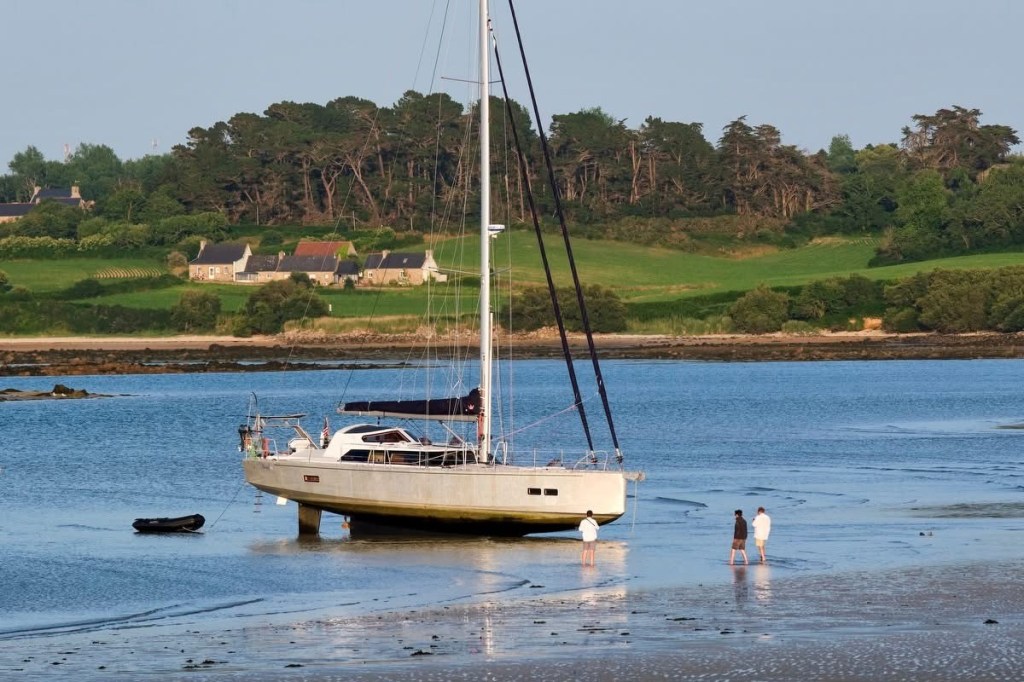
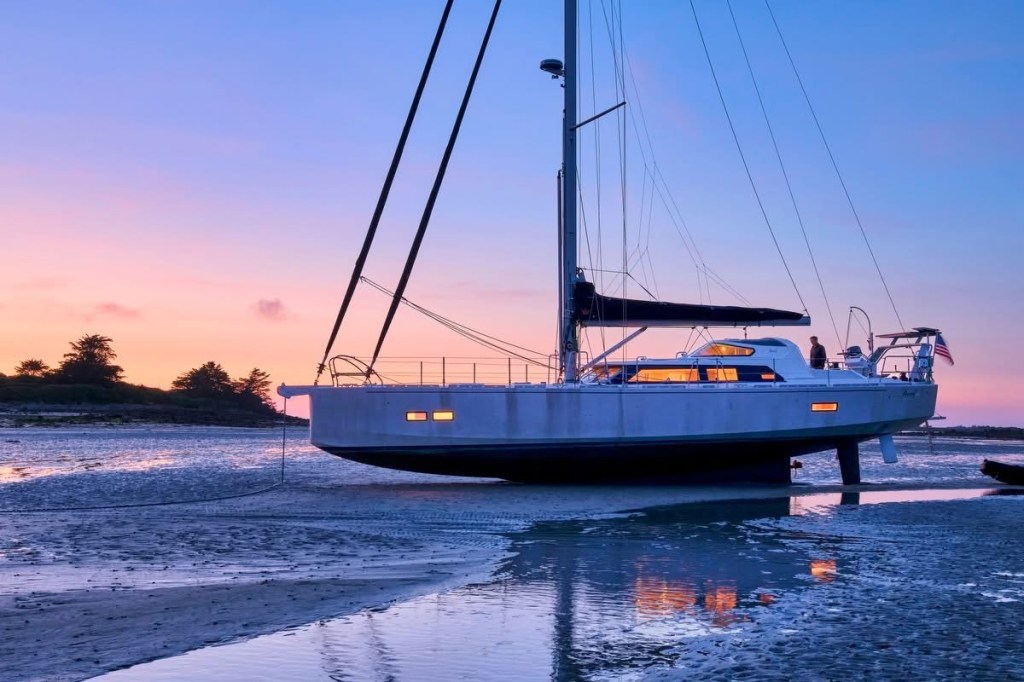
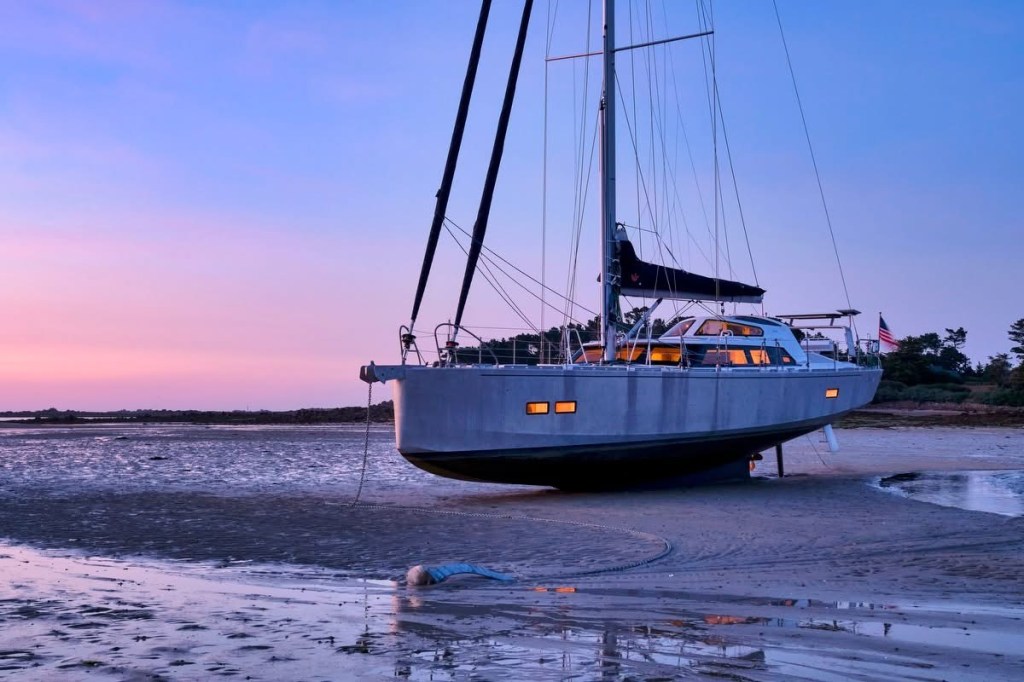
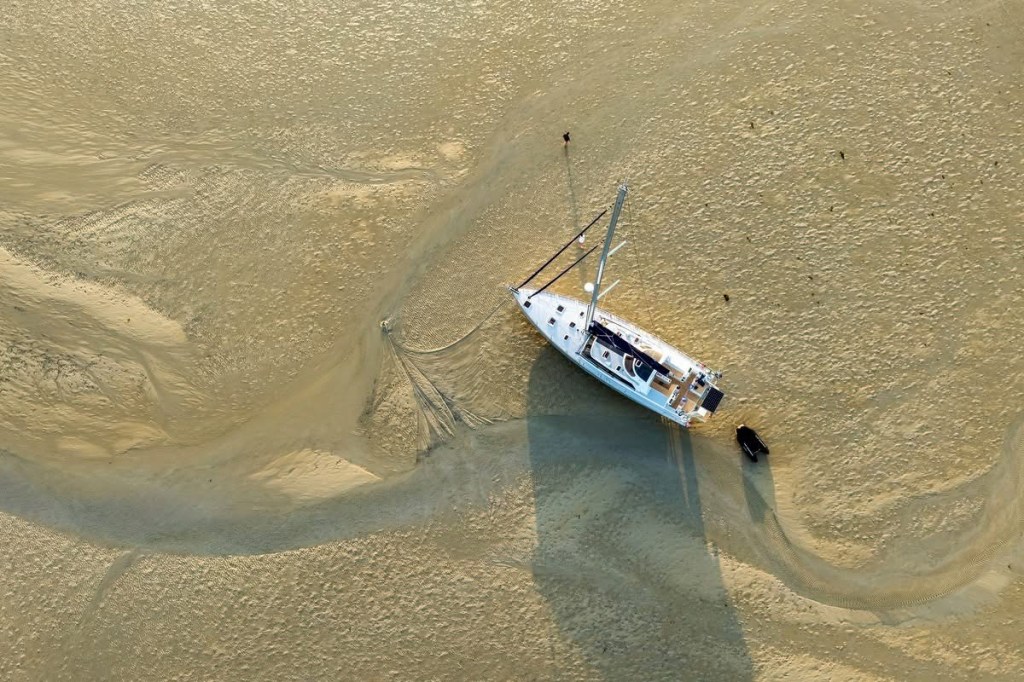
S/V Spindrift recently had her own drying-out experience, and as you can see in the photos below, she wore it with considerably more dignity than most of us manage after a long night out. No sunglasses, no Gatorade — just a perfectly grounded boat doing what she was built to do.
Unlike her skipper on certain regrettable evenings, Spindrift came back from her dry-out looking better than ever.
Cheers — and may your tides always be in your favor.


 S/V Spindrift
Leave a comment