
Palma de Mallorca to Cap d’Agde, June 2–4, 2026
Thibaut arrived at the boat in Pantalan Mediterráneo marina in Palma with his bag over his shoulder and we were gone within the hour. Bob and I had the boat ready and Thibaut knew time was not on our side, so he was just fine with the idea of getting familiar with things as we headed north. Lines away at 1311 UTC / 1511 local, and we were headed to Cap d’Agde in France, about 250 nm, where S/V Spindrift goes on the hard for the summer.
That’s how it goes sometimes. You get to know a person and they get to know the boat on the water because there’s weather coming and you need to get your ass moving. First up was a detail discussion about bailout and shelter spots. We had a long way to go and were certain we’d have to take shelter once we hit the Spanish mainland.
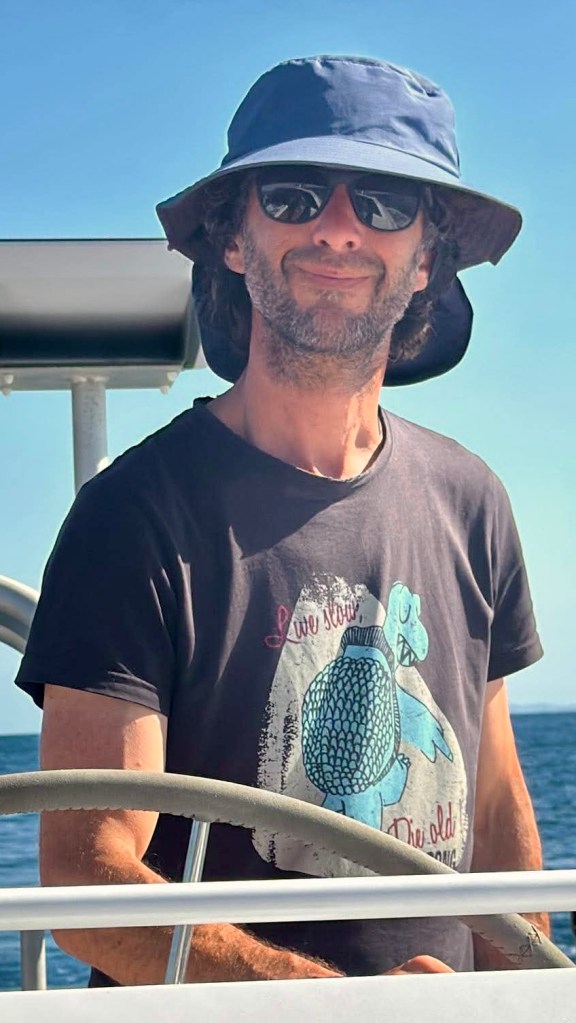
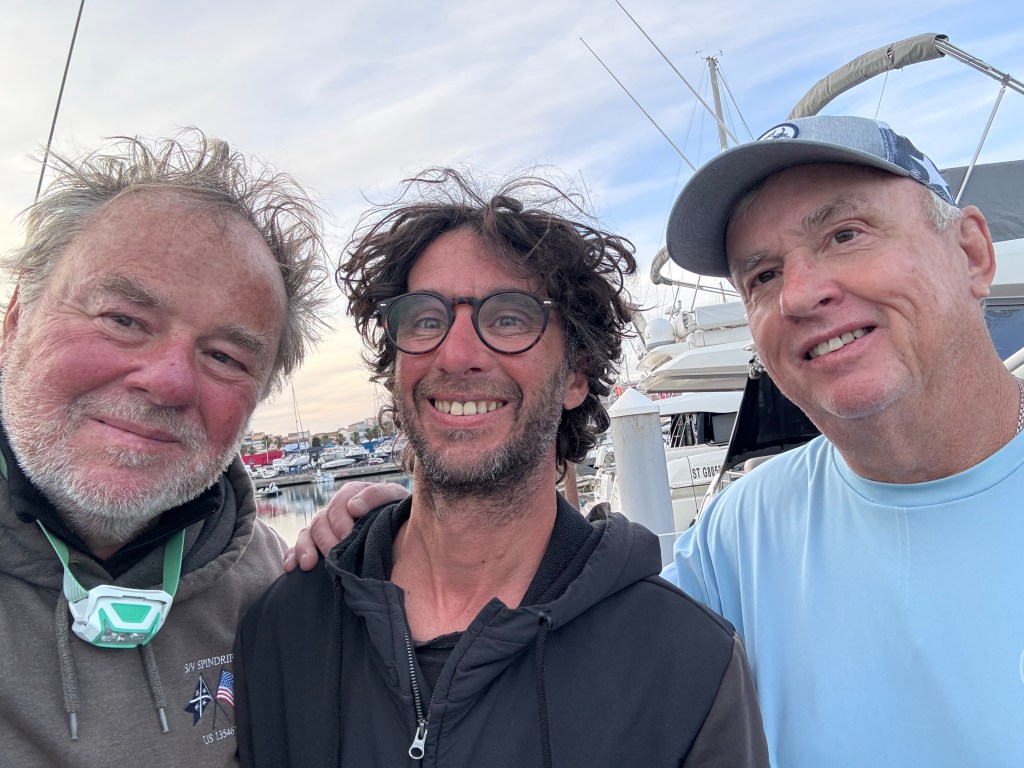
Thibaut came via Boréal, assigned to help us run the boat north to position her for the Cannes Yachting Festival in September, where she will be on show. Forty-four years old, more miles under his keel than he can count. He knows these hulls: how the rig wants to be trimmed, what S/V Spindrift is telling you when she starts to complain, how to tweak the odd mainsheet system that is common on all Boréals. Bob had been aboard for a few days already. An old salt himself, cut his teeth in Watch Hill. We ran together on URI’s sailing team, and always good for a tall tale. (And I mean tall tales.) They’d never met each other. Within a few hours it didn’t matter.
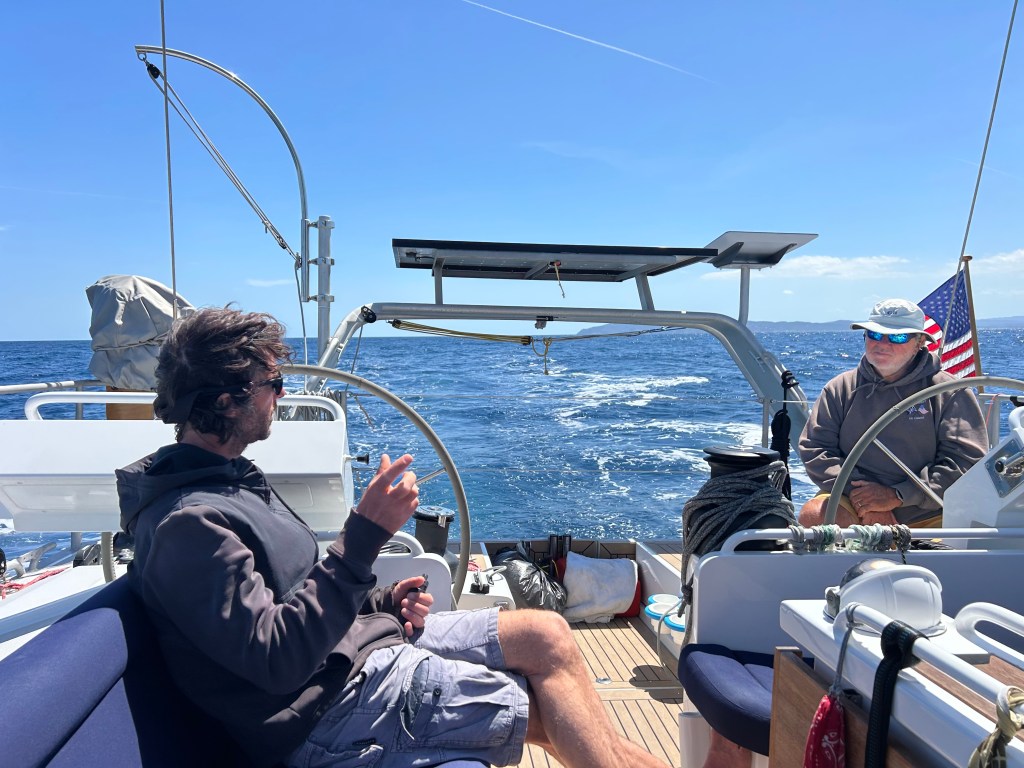
The sea was flat calm. The Tramontana was another story. A low pressure system in the Bay of Biscay was pushing air across into the Gulf of Lion, and we knew a strong Tramontana was coming with it. We were headed right into its teeth, hoping we could make the mainland Spain coast and take shelter before it arrived. About 250 miles away. At 6 knots, that’s a long way away. If we didn’t make it in time, we’d have 35 to 40 knots on the nose and nowhere to shelter. The night brought no wind and blistering heat — the kind of Mediterranean overnight where the drone of the motor is not welcome and the heavy hot air just sits on top of you. We should have had a moonlit night to make things somewhat pleasant but the cloud cover had other ideas. The sea and sky blurred into the same black nothing. We got some sailing in, not much. A few patches of wind here and there. Mostly we drove north with haste.
Dinner underway was pasta and meatballs — I’d grabbed the meatballs at a store in Palma before we left. The Spanish are many things. Meatball and sauce people they are not. Thibaut and Bob both said they were excellent, ya, I thought to myself that was just bullshit, they were just trying to be polite. I needed the compliment and took it, particularly since I might have made a big mistake rushing a trip north in a building Tramontana. That night we settled into our watch schedule, three on, three off, and let the hours click away.
We dropped the hook in Playa de Palamós at 1535 UTC / 1735 local, June 3rd — twenty-six hours out of Palma. As we approached the coast, the Pyrenees came into view, still snow-capped. Thankfully, no drama on this short passage. The anchorage said everything: a dozen boats in on a hook. You could just tell these were cruisers like us, taking shelter, waiting for this northerly to blow itself out. Polish, German, Maltese, and San Marino registered boats. San Marino is landlocked — a tiny republic surrounded entirely by Italy, not a foot of coastline to its name. They’ve been registering ships since 1859. Someone on that boat made a very deliberate administrative choice. A real eclectic international group with one thing in mind. Take shelter. Well sheltered. Had a bottle of wine and went for a swim.
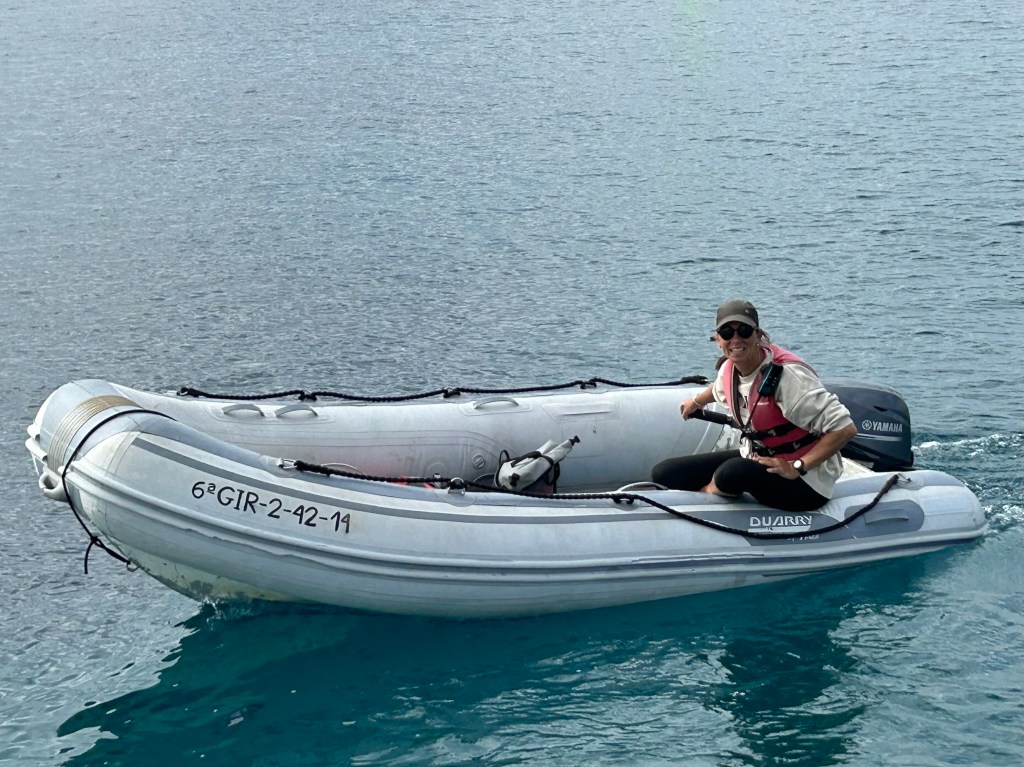
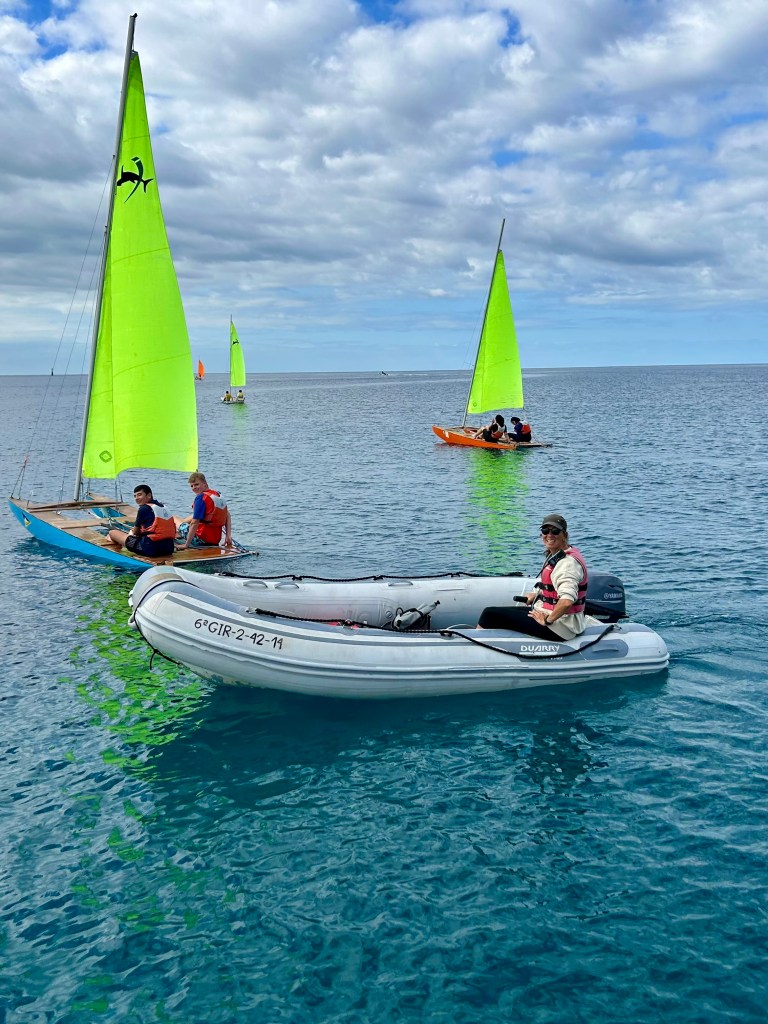
The evening brought something we didn’t plan for. At anchor we always seem to attract attention from the local clubs — kids on the water, coaches watching, somebody eventually coming over to have a look at the boat. I never miss these conversations. I’ve been fascinated by sailing culture everywhere we’ve gone, and admittedly frustrated with how youth sailing gets done back home. It’s well documented: youth participation in the US is stagnating and in places declining, while Europe keeps growing. The difference is structural, but cultural too. In the US, sailing tilts toward competition and the expense that comes with it. Here, the goal is building a base of people who love the sea. The coaches at these clubs are often national champions or Olympic medalists, but medals don’t seem to be the point. What drives them is the waterfront. The sea. You can’t help but think their approach is part of why you see what you see everywhere along this coast — Spain, France, Portugal, loads of kids out on dinghies every day. Sailing is growing here, and strong. More kids getting into it, more staying with it for life. Build a bigger base, keep the focus on the love of the sea, and what you get is the kind of results you see in world class dinghy events today. The numbers aren’t hard to read. The US was once a global sailing powerhouse, second all-time in Olympic medals. Then came an eight-year drought, broken only by a bronze at Paris 2024. American sailing was built on old money and postwar yacht club culture. That base is aging out without being replaced. European nations are consistently outperforming the US across youth and Olympic sailing, and it isn’t close. France won the Youth Worlds Nations Trophy in 2021, Spain in 2022, Italy back-to-back in 2023 and 2024. What needs to be rebuilt in the US isn’t a medal program. It’s a culture. Something to replace the old yacht club gatekeeping with a genuine love of the sea and easy access. Build that base back up, and the medals will take care of themselves. There’s easy access everywhere in these countries, but that’s a topic for another post. This evening it was Club de Vela Sant Antoni. One of two clubs in this harbor. Their coach, Anna Borràs, came alongside, and we got talking about what they sailed and what they were focused on. She said, in broken English: “The only thing that counts is for us go sailing, enjoy the sea and make good festival.” When she said that, it all came into focus. Right there, in broken English, is why sailing is stagnant in the US.
The boat is the Patí a Vela — a traditional Catalan sailing skate raced along the Costa Brava for generations. Narrow, flat-hulled, no keel, no rudder, barely any freeboard, single lateen sail. Stability and steering both come entirely from the crew’s body weight and sail trim. You’re hanging off the side constantly, reading the wind, negotiating every degree of course with your body. Get it wrong for a second and it tells you immediately. Sailors who come up through Patí a Vela programs develop a boat feel and physical reflexes that a more forgiving hull simply won’t teach. National champions have come out of this club for years. Between the boat and Anna’s philosophy, it’s not hard to see why.
Then off to our bunks.
We weighed anchor at 0756 UTC / 0956 local, June 4th, for the final leg to Cap d’Agde. Ninety miles to the north. The first stretch was a slog: 30 knots on the nose, leftover chop and wind from the Tramontana the evening before, one reef in and the J2 up, spray over the bow, everything stiff and wet. Tack, and tack, and tack again. Trying to stay close to shore where the wind was a bit weaker. Then it went light, as forecast. We shook the reef, rolled out the J1. The wind backed around 180 and we had a night full of wonderful sailing.
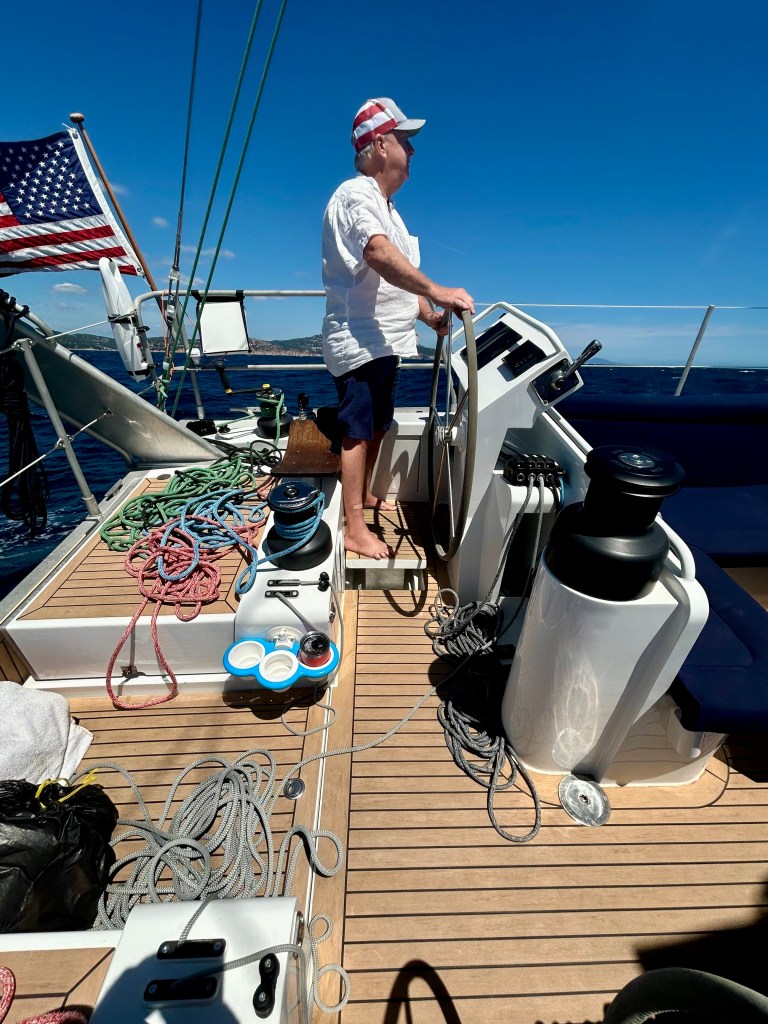
A waning moon and clear sky. Night reaches under a starlit sky are what make trips like this worth it. We skipped any formal watch schedule since we’d be arriving in the early morning hours. Thibaut and Bob in the cockpit, talking trim, trading stories. Thibaut showing me things I’ll keep using about how to tweak that mainsheet system.
Thibaut treated us to a review of the stars. Polaris due north and steady. Vega nearly overhead, the Summer Triangle spread wide. Scorpius low on the southern horizon, Antares glowing red at its heart. At around 0200 UTC / 0400 local, the coast of southern France materialized out of the dark. We had to weave our way through the shallows and rocks into Cap d’Agde.
Shallows were expected, but the fishing fleet around an hour or two before dawn was a surprise. They all come out of the harbor at once, heading in every direction, like someone is firing missiles at you. On the chartplotter it looks like an attack — AIS tracks radiating out from the harbor entrance in a full spread, and you’re in the middle of it trying to figure out which ones are going to cross your bow.
On the far side of that gauntlet was a slip we hadn’t found yet, a travel-lift turn a few days off, and a stretch of French coast with a reputation I wasn’t quite ready for. First we had to get through the fleet. And………..stay tuned……
Fair winds from S/V Spindrift
 S/V Spindrift
Leave a comment